Is it safe to stay in my house after a leak or flood?
It depends on what the water touched. Turn off the power to wet areas if you can reach the panel safely and dry. Stay out of rooms with standing water near outlets. Floodwater or sewage can carry germs, so keep kids and pets away. If you smell gas or see sagging ceilings, leave and call the proper emergency service first.
How much does water damage restoration cost?
Typical U.S. prices run from a few hundred dollars for a small, clean-water spill to several thousand for a large area or a flooded basement. Costs vary by job. Size, water type, materials and drying time all matter. That is why a written quote helps. It lets you compare providers line by line before anyone starts.
Will my homeowners insurance cover water damage?
Some policies may cover sudden damage, like a burst pipe. Many do not cover slow leaks or flooding from outside, which often needs separate coverage. Check your policy and ask your insurer. Providers can often help document the damage with photos and notes, which may make a claim easier to explain.
How quickly should water be removed?
Sooner is kinder to your home. Wet drywall, carpet and wood can start to grow mold in a day or two, and our humid climate speeds that up. Many providers can respond quickly, but availability varies. Request a callback to check provider availability, and meanwhile mop up what you safely can.
What is the difference between water extraction and structural drying?
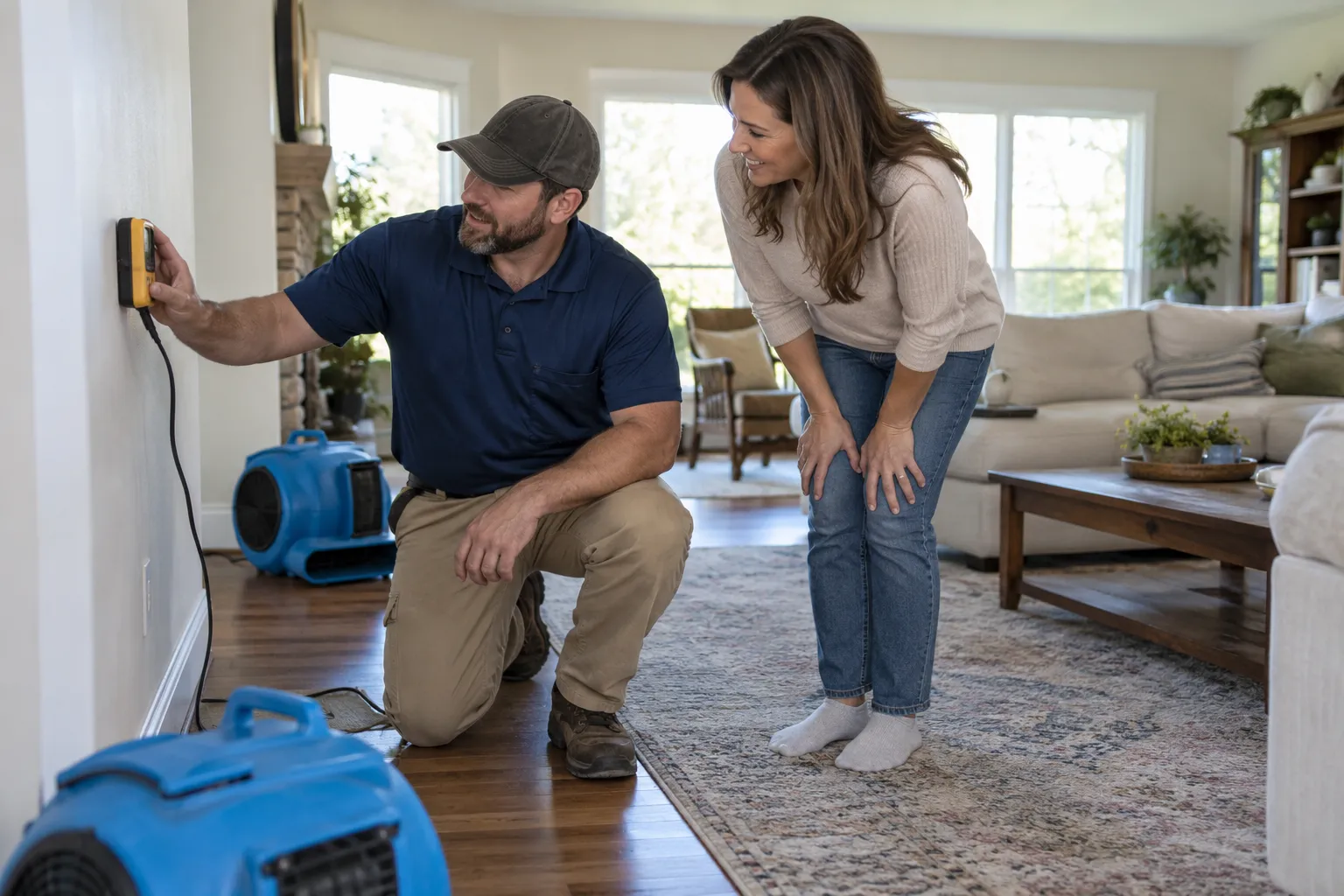
Extraction pulls out the standing water using pumps and vacuums. Structural drying comes after. It uses air movers and dehumidifiers to dry walls, floors and framing that still hold moisture you cannot see. Skipping the drying step is a common reason mold shows up later, so ask any provider how they handle both.
Can I clean up a flooded basement myself?
Small, clean-water spills are often fine to handle yourself with towels, a wet vac and fans. Larger floods are harder. Hidden moisture can stay in walls and slabs, and sewage or storm water needs protective gear. If the water is deep, dirty or has been there a while, a local provider is usually the safer choice.
What should I do before the provider arrives?
Stop the water source if you can, such as the main shutoff valve. Take clear photos and short videos of everything wet. Move small items and furniture to dry spots. Open windows if the air is dry outside. Skip heavy lifting and avoid using household vacuums on water. Then write down questions to ask about the quote.
What should a written quote include?
A good quote lists the work in plain terms: extraction, drying equipment, how many days, cleanup, and any removal of wet materials. It should note what is not included and how extra work gets approved. Quote in writing, always. If something looks vague, ask the provider to spell it out before you agree.